The land remembers
Places hold the physical and social imprint of decisions long after the people who made them are gone.
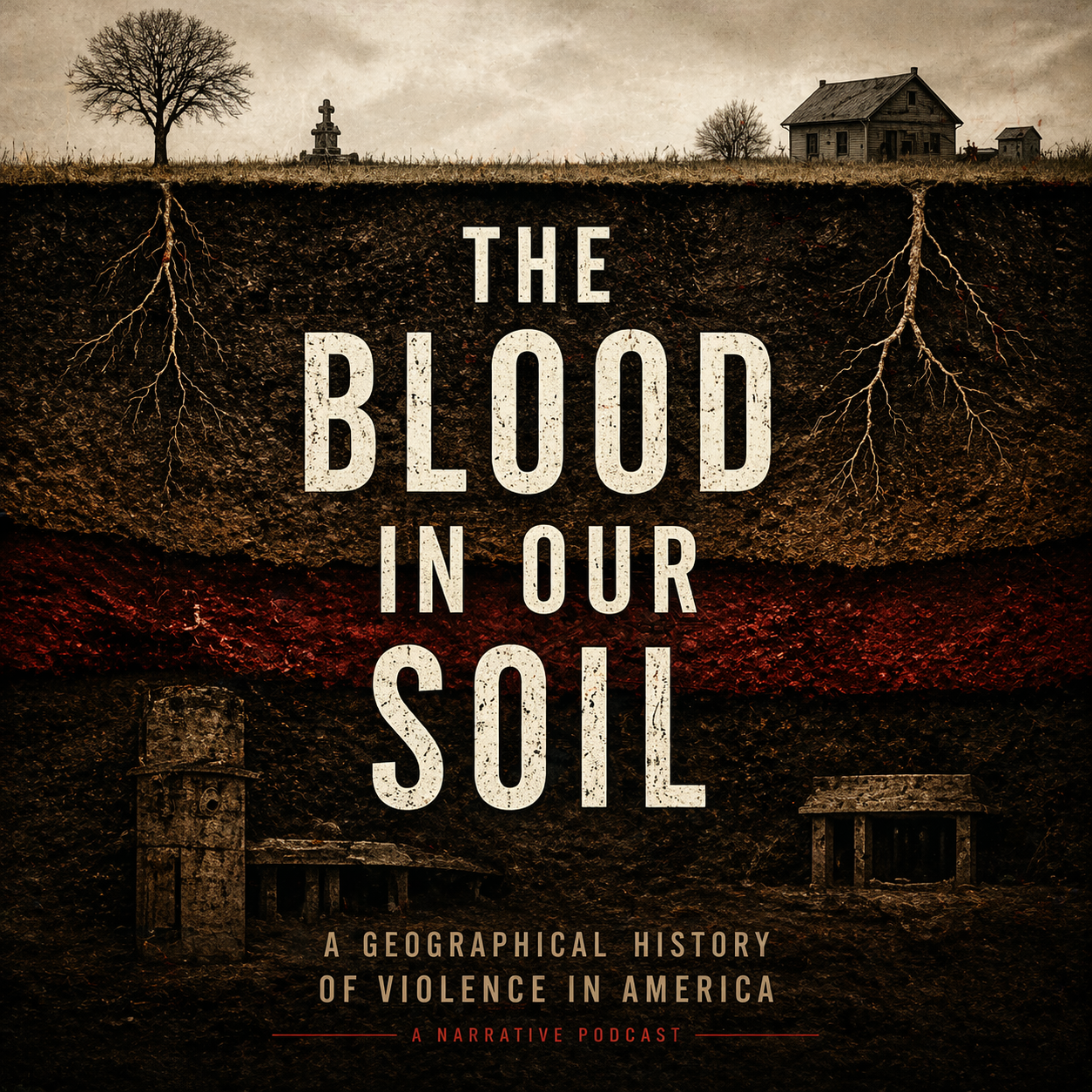 The Blood in Our Soil
A geographical history of violence in America
It both shapes and is shaped by the places in which it occurs.
A narrative podcast about how violence is built into the places we live.
History is written in documents. It is also written in land.
Now available · Episode 1
Two stones beside an unnamed road open onto removal, slavery, war, racial violence, folklore, and the quiet work of forgetting.
Start here · 1:43
Across the United States, violence is written into the landscape, sometimes visible, more often hidden beneath the surface.
Violence in America is not random, episodic, or confined to the past. It is structured, spatial, and cumulative.
How to listen
A narrative exploration of how land, labor, movement, and access shape the geography of violence in the United States.
Places hold the physical and social imprint of decisions long after the people who made them are gone.
Law, infrastructure, industry, and policy determine who may move freely, who is contained, and who bears the cost.
History is not scenery. It is a set of structures that continue to organize everyday American life.
From the field notes
Violence remembered
Violence curated
Violence engineered
Violence exhausted
Violence abstracted
Violence enforced
Violence withheld
The accumulated argument
Season One moves through seven American places before drawing its accumulated argument together and looking toward Season Two.
From the blog
Juneteenth is not only a story about delayed news. It is about the distance between a right being declared and the power to make it real, and the systems that keep emancipatory knowledge from becoming action.
Read the latest field noteListen differently